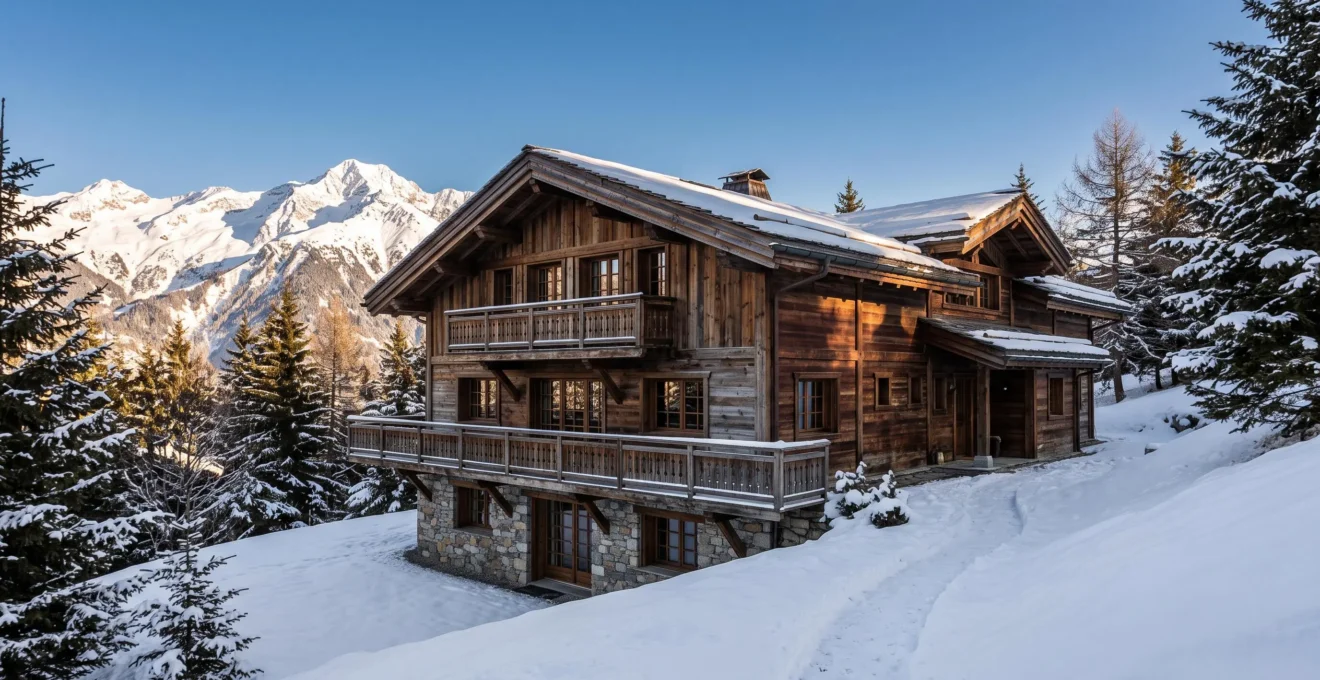
Navigating Courchevel 1850’s ultra-premium chalet market presents a singular challenge: nearly every property claims exceptional status, yet the differences that justify price variations of several million euros remain invisible to external buyers. Two chalets with similar square meterage and comparable luxury finishes can command dramatically different values based on micro-location factors as subtle as 100 metres of positioning, specific sun exposure angles, or the precise quality of slope access. For international buyers unfamiliar with the resort’s intricate geography, distinguishing genuinely exceptional properties from merely expensive ones requires the type of hyper-local intelligence typically accessible only to market insiders.
The stakes justify the scrutiny. A multi-million euro acquisition represents both a significant family asset and a substantial investment decision requiring validation beyond surface-level marketing claims. The challenge lies not in finding luxury properties—Courchevel 1850 offers abundance—but in identifying which specific combinations of location, architectural quality, and functional characteristics will deliver both lifestyle satisfaction and investment security over the ownership period.
This analysis provides the concrete evaluation framework and micro-location intelligence that levels the information asymmetry between local market participants and sophisticated international buyers navigating this terrain for the first time.
- Courchevel 1850: where global prestige meets Alpine exclusivity
- Should you work with a specialized Courchevel agency or go direct?
- What defines an ‘exceptional’ chalet in a market where everything is luxurious?
- Courchevel 1850’s micro-locations: understanding the prestige geography
- Seven selection criteria that separate informed buyers from uninformed ones
- How much should you budget for different property tiers in 2026?
- Frequently asked questions about buying exceptional chalets in Courchevel 1850
Courchevel 1850: where global prestige meets Alpine exclusivity
Courchevel 1850 occupies a distinctive position within the hierarchy of global luxury ski real estate. Whilst resorts such as Verbier, St Moritz, and Gstaad command premium pricing within their respective markets, Courchevel 1850 consistently demonstrates price-per-square-metre values at the upper end of Alpine luxury property benchmarks. This premium reflects not merely brand prestige but tangible structural advantages: direct access to Les Trois Vallées—the world’s largest linked ski domain—combined with the concentration of high-end hospitality infrastructure and an international clientele that sustains year-on-year demand at the ultra-premium tier.
Les Trois Vallées encompasses approximately 600 kilometres of linked pistes across multiple valleys, with Courchevel 1850 positioned as the premium residential node within the Courchevel valley system. The official resort infrastructure confirms this geographic positioning, with the village situated at the convergence of major lift systems providing immediate access to varied terrain. Whilst Courchevel’s multi-village structure includes 1650, 1550, and Le Praz at lower altitudes, the 1850 designation historically correlates with proximity to primary slope access and the concentration of prestige amenities.
What distinguishes Courchevel 1850’s property market from other luxury ski destinations is the degree to which hyper-local value factors create dramatic pricing differentials over remarkably small distances. A chalet positioned 100 metres closer to the Bellecôte piste departure point can command a substantial premium over an otherwise comparable property requiring a brief walk or shuttle. South-west facing orientation delivering afternoon natural light throughout the winter season materially affects both lifestyle quality and resale value. View corridors protected from future construction obstruction represent quantifiable assets. These micro-distinctions operate at a granular level rarely encountered in other luxury markets, where prestige correlates more directly with address or building rather than precise positioning within a compact geographic area.
Post-pandemic buyer priorities have reinforced certain value factors whilst moderating others. International purchasers increasingly prioritise properties offering generous private outdoor space, dedicated wellness facilities, and sufficient room for extended family use over proximity to nightlife and restaurant density. This evolution has elevated the relative attractiveness of quieter exclusive zones offering larger plot sizes and enhanced privacy, whilst maintaining the enduring premium commanded by authentic ski-in ski-out access for families with active skiing priorities.
Should you work with a specialized Courchevel agency or go direct?
The decision whether to engage a specialised local agency or pursue independent property search represents a strategic calculation affecting both acquisition success and ongoing ownership experience. An objective assessment weighs the tangible benefits against costs and alternative approaches.
The specialized agency value proposition centres on several concrete advantages. Access to off-market properties represents a material factor in the ultra-luxury segment, where a significant proportion of transactions occur through direct networks without public listing. Sellers at this tier often prefer discretion and pre-qualified buyers, making properties available exclusively through trusted agency relationships. For external buyers, this network access provides visibility to opportunities otherwise invisible regardless of independent research effort.
Hyper-local micro-location intelligence delivers the type of granular knowledge developed only through sustained market participation: which specific streets within Bellecôte offer superior afternoon sun exposure, how planning regulations affect different plots, which properties face future development risk, and how micro-positioning affects resale liquidity. This intelligence level surpasses what external buyers can acquire through short-term research, addressing the information asymmetry that creates acquisition risk.
Transaction complexity navigation provides particular value for international buyers unfamiliar with French property law, notarial processes, tax implications, and regulatory compliance requirements. Specialised agencies coordinate professional networks including legal counsel, tax advisors, and property managers, streamlining a process that independent buyers must assemble from unfamiliar providers. Post-acquisition rental management represents an additional consideration: agencies offering integrated property management services address the operational complexity that often deters international owners from maximising rental income during unused periods.
Agencies such as the real estate agency Altitude Courchevel, which combines Courchevel-specific market focus with integrated rental management capabilities, illustrate this model. The specialisation in a single resort enables the depth of local knowledge that generalist Alpine agencies cannot replicate, whilst the rental management integration addresses both acquisition guidance and ongoing operational requirements through a unified relationship.
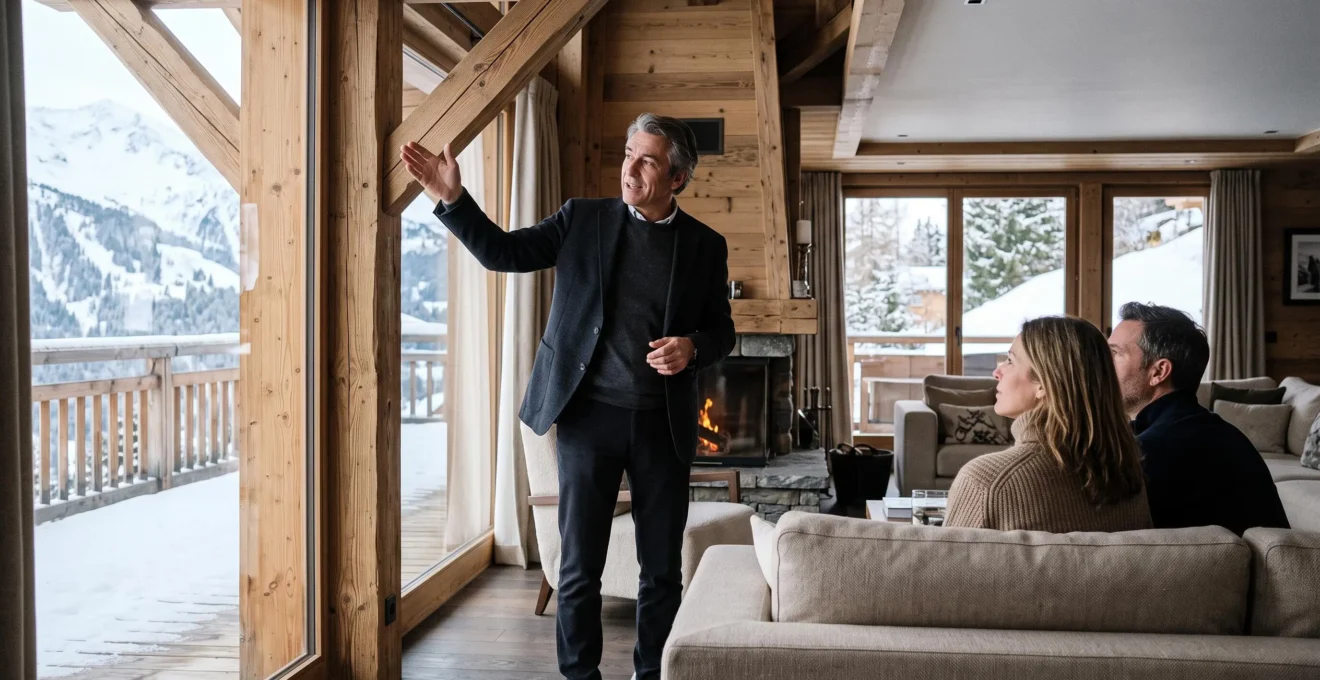
The independent approach limitations include several practical constraints. Information asymmetry versus local sellers places external buyers at disadvantage during negotiations, particularly regarding property condition, comparable valuations, and appropriate price positioning. French property transaction complexity—involving notarial procedures, tax considerations, planning regulations, and ownership structure decisions—requires either substantial personal expertise or assembly of professional advisors without established relationships. The absence of network access excludes off-market opportunities and limits visibility to publicly listed inventory, which may not include the optimal property for specific requirements. Post-acquisition rental management presents a separate operational challenge requiring either direct oversight or engagement with property managers lacking prior relationship context.
When independent approaches remain viable: Buyers possessing existing Courchevel relationships, French legal and tax expertise, and no requirement for rental income optimisation may successfully navigate direct purchases. This scenario typically applies to returning buyers with prior Alpine property experience or those prioritising purely personal usage without investment return expectations.
What defines an ‘exceptional’ chalet in a market where everything is luxurious?
The terminology employed in luxury property marketing creates systematic confusion. Descriptions such as “exceptional quality”, “prestigious finishes”, and “exclusive location” appear with such frequency across listings that they cease to convey meaningful distinction. For buyers encountering Courchevel 1850’s market without local reference points, establishing a concrete quality hierarchy becomes essential to informed evaluation.
A practical taxonomy distinguishes four tiers. Luxury standard properties represent the baseline expectation at this price point: high-quality construction using premium materials, professional interior design, modern building systems, and amenities such as sauna and hot tub. These chalets deliver comfort and aesthetic appeal without distinctive architectural character. Luxury superior properties elevate specific elements—perhaps employing a recognised interior designer, incorporating rarer materials such as aged local larch rather than standard timber, or offering more sophisticated wellness facilities including steam rooms and treatment areas.
The threshold to exceptional status requires architectural distinction that transcends expensive finishes. This typically involves signature architect involvement, demonstrable integration with natural topography rather than imposed structure, spatial design exhibiting both functionality and aesthetic coherence, and material selection reflecting genuine rarity or craftsmanship. Authentic aged timber displaying natural patina and character, rare stone varieties selected for specific visual properties, handcrafted metalwork or carved details executed by skilled artisans—these elements evidence investment in substance rather than surface luxury. The exceptional tier also correlates with amenity quality: professional-grade spa installations with specific therapeutic features, temperature-controlled wine storage designed for serious collectors, home cinema with acoustic engineering, and dedicated staff accommodation enabling full-service operation.
The ultra-rare category applies to a small subset of properties combining multiple exceptional characteristics: recognised architectural pedigree, prime micro-location, substantial land holdings, heritage significance, or unique features impossible to replicate under current planning regulations. These properties function as much as legacy assets as residential real estate.
The distinction between new construction exceptional properties and renovated heritage chalets presents different value propositions. Contemporary builds offer the advantage of modern building systems, energy efficiency, optimised spatial planning, and customisation to current lifestyle preferences. Renovated heritage properties provide authentic Alpine character, established landscaping, proven structural longevity, and often superior plot positioning predating more restrictive planning frameworks. Neither category inherently surpasses the other; the appropriate choice depends on whether the buyer prioritises contemporary functionality or authentic architectural heritage.
| Quality tier | Architectural characteristics | Material markers | Amenity distinction |
|---|---|---|---|
| Luxury standard | Professional design, quality construction, no signature architect, formulaic spatial planning | High-end standard materials: quality timber, granite or marble, premium fixtures | Sauna, hot tub, basic gym, standard entertaining spaces |
| Luxury superior | Recognised interior designer, enhanced attention to detail, improved spatial flow | Upgraded material selection: aged local wood, distinctive stone varieties, custom metalwork | Steam room, larger wellness area, dedicated cinema room, wine storage |
| Exceptional | Signature architect, integration with topography, spatial design coherence, distinctive aesthetic identity | Rare materials selected for character: aged larch with patina, rare stone, artisan craftsmanship evidence | Professional spa with therapeutic features, temperature-controlled wine cave, acoustic-engineered cinema, staff quarters |
| Ultra-rare | Architectural pedigree, heritage significance, or unique configuration unreplicable under current planning | Exceptional materials combined with provenance, historical elements, bespoke commissions | Multiple exceptional amenities plus unique features (private access, exceptional plot, protected views) |
This framework provides actionable assessment criteria during property viewings. Rather than accepting marketing descriptions, informed buyers systematically evaluate whether a property exhibits the tangible markers justifying its claimed tier positioning and corresponding price point.
Courchevel 1850’s micro-locations: understanding the prestige geography
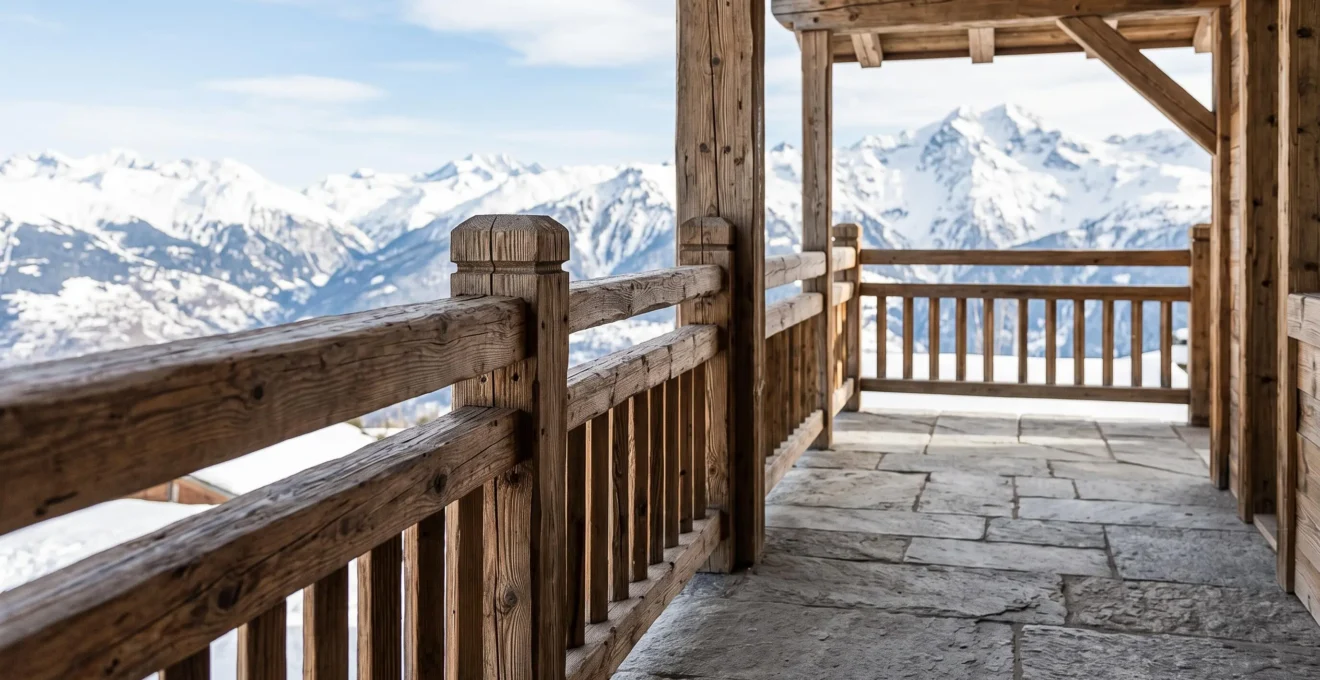
Courchevel 1850’s compact geographic footprint contains distinct zones exhibiting different lifestyle characteristics and value propositions. The municipality officially recognises several sectors including Bellecôte, Jardin Alpin, Pralong, and Chenus, used for administrative purposes such as trail management. These designations correspond to meaningful differences in property experience and market positioning.
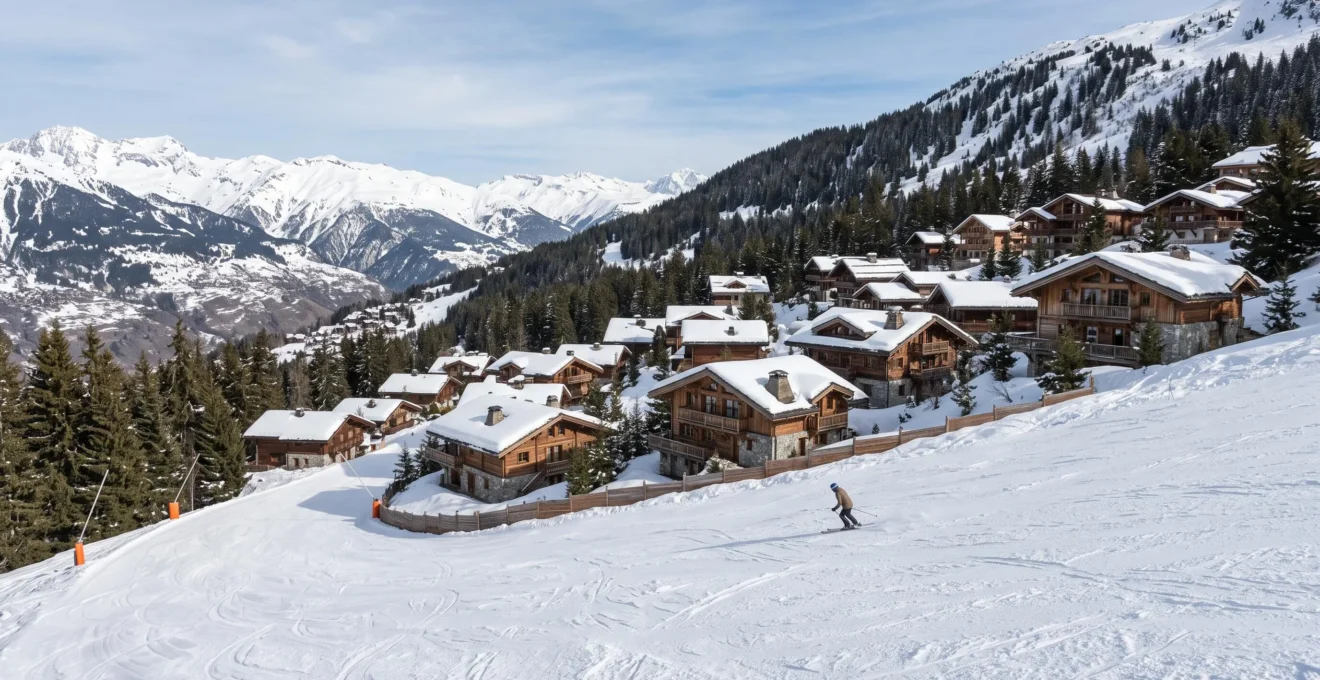
Bellecôte and Jardin Alpin represent the ski-in ski-out epicentre, offering direct access to the Bellecôte piste and immediate proximity to primary lift infrastructure. Properties in these zones command the highest premiums for buyers prioritising maximum ski convenience and the prestige association with Courchevel 1850’s most recognised addresses. The typical buyer profile matches active skiing families with children in ski school, guests expecting effortless slope access, or owners planning significant rental activity where ski-in ski-out status drives booking premiums. The trade-off involves higher property density, greater pedestrian and skier traffic during peak periods, and premium pricing reflecting the scarcity of authentic slope-side positioning.
Chenus and the quieter exclusivity zones occupy elevated or peripheral positions offering residential tranquillity, panoramic viewing perspectives, reduced surrounding density, and often larger plot sizes. These areas sacrifice some immediate ski access convenience—typically requiring a brief walk to lift infrastructure or shuttle utilisation—in exchange for enhanced privacy, superior afternoon sun exposure on south-facing slopes, and the ability to secure larger chalets on more generous land holdings. This positioning appeals particularly to couples or families prioritising peaceful retreat character over constant animation, buyers seeking entertaining space and outdoor areas, and those valuing long-term lifestyle quality over maximum rental yield optimisation.
Village centre proximity creates additional trade-off calculations. Properties within walking distance of restaurants, shops, ESF meeting points, and evening entertainment offer daily convenience particularly valuable for families with children or non-skiing household members. The corresponding considerations include noise from commercial activity, tourist density during high season, and parking or traffic complexity. Properties positioned in quiet residential areas require transportation for village amenities but deliver peaceful evening environments and reduced through-traffic.
Sun exposure and orientation materially affect both daily experience and long-term value. South or south-west facing properties receive afternoon natural light throughout the winter season, maintaining warmer terrace temperatures for outdoor usage and delivering the golden-hour illumination that enhances mountain views. North-facing properties experience limited direct sunlight during winter months, affecting both lifestyle appeal and snow retention on private outdoor areas. Whilst orientation seems abstract during summer viewings, its impact on winter usability justifies systematic verification.
- If skiing convenience represents the primary priority (families with active skiers, maximising rental income, guests expecting immediate slope access):
Focus search on Bellecôte and Jardin Alpin zones offering authentic ski-in ski-out access. Accept higher per-square-metre pricing and increased surrounding density as the cost of prime positioning.
- If privacy, views, and tranquillity outweigh immediate ski access (couples, extended family gatherings, retreat-focused usage):
Prioritise Chenus and elevated exclusive zones offering larger plots, panoramic perspectives, and residential calm. Plan for brief walks or shuttle usage to reach primary lifts.
- If daily village convenience matters (families with children in ski school, non-skiing household members, preference for walking to restaurants):
Target properties within comfortable walking distance of village centre amenities whilst assessing noise and traffic trade-offs during high season.
- If afternoon natural light and outdoor terrace usage matter significantly:
Systematically verify south or south-west orientation regardless of zone, as this factor affects daily winter experience across all micro-locations.
The archetypal decision scenario facing informed buyers involves choosing between a larger, newer chalet in Chenus offering 250 square metres with panoramic views and substantial outdoor space versus a smaller 180-square-metre classic property in Bellecôte with direct piste access and immediate village proximity. Neither option surpasses the other objectively; the appropriate choice depends entirely on whether the buyer’s personal usage pattern prioritises space and tranquillity or ski convenience and village animation. Recognising this trade-off structure prevents the common error of pursuing an idealised property combining all attributes—a configuration rarely available and commanding ultra-rare pricing when it does appear.
Seven selection criteria that separate informed buyers from uninformed ones
Systematic property evaluation requires a concrete framework applicable during viewings. These seven criteria capture the factors that materially affect both lifestyle satisfaction and long-term value, with specific verification markers for each element.
Criterion 1: Slope access quality and authenticity
The term “ski-in ski-out” appears across property marketing with varying degrees of accuracy. Authentic ski-in ski-out means skis remain on feet from property exit to piste entry, with return equally direct at day’s end. Verify the actual configuration: Does the property connect directly to a maintained piste or does it require walking along a path? What gradient must be navigated—suitable for children and less confident skiers, or challenging? Can guests of all ability levels return to the property skiing, or does the access route require advanced technique? Some properties marketed as ski-in ski-out actually require a brief walk to reach slope access, a distinction that matters significantly for families with young children or less mobile guests.
Verifying authentic ski-in ski-out access: During viewings, request specific demonstration of the ski route from property to piste and return path at end of day. Assess gradient, width, exposure to through-traffic, and suitability for the least confident skier in your expected guest profile. Properties requiring even 50 metres of walking with ski equipment deliver materially different convenience than authentic slope-side access.
Criterion 2: Sun exposure and view corridor protection
South or south-west orientation delivers afternoon natural light during winter months, affecting terrace usability, snow melt on outdoor areas, and the quality of mountain views during optimal lighting conditions. View corridors warrant equal scrutiny: verify whether the panoramic perspective remains protected from future construction that could obstruct sight lines. Consult local planning regulations or seek professional guidance on development restrictions affecting the property’s view corridor. A spectacular view loses significant value if future building activity can legally obstruct it.
Criterion 3: Privacy and surrounding development density
Visual and acoustic isolation varies substantially across properties at similar price points. Assess proximity of neighbouring chalets, sight lines from adjacent properties into private outdoor areas, and ambient noise levels during both quiet periods and peak season. Investigate future development risk in the immediate vicinity—are there vacant plots with building permission that could affect privacy? Properties offering genuine seclusion command premiums justified by their scarcity in an increasingly built environment.
Criterion 4: Proximity to essential amenities and infrastructure
Walking distance to ESF meeting points matters for families with children in ski lessons. Access to restaurants, shops, and evening entertainment without requiring vehicle use affects daily convenience. However, immediate proximity to commercial areas correlates with higher ambient activity and reduced tranquillity. The optimal balance depends on personal priorities: families with young children often prioritise amenity proximity, whilst couples or groups seeking retreat character accept transportation requirements in exchange for peaceful surroundings.
Criterion 5: Architectural integrity and adaptation potential
Structural quality affects long-term ownership costs and adaptation possibilities. Assess whether the property permits future extension or modification under current planning regulations. Verify compliance with evolving energy efficiency standards. For older chalets, evaluate renovation requirements realistically—character properties often require ongoing maintenance investment that should factor into total ownership cost calculations. Conversely, properties built or renovated to contemporary standards typically deliver lower maintenance overhead during initial ownership years.
Criterion 6: Rental income potential for investment-oriented buyers
Properties combining ski-in ski-out access, sufficient bedroom count for group bookings, high-quality amenities, and professional management support generate superior rental yields. However, the type of accommodation that attracts premium rates requires specific configurations: adequate bedroom suites with en-suite bathrooms, entertaining spaces suitable for groups, wellness facilities, and operational infrastructure including staff areas and service access. Properties optimised purely for personal family use often lack the configurations that maximise rental performance. Buyers intending significant rental activity should prioritise market-proven configurations over purely personal aesthetic preferences.
Criterion 7: Resale liquidity and market positioning
Ultra-premium properties naturally exhibit longer sales cycles than mainstream real estate. However, certain characteristics enhance resale confidence: properties in recognised prime micro-locations, chalets exhibiting architectural quality that transcends temporary design trends, and configurations appealing to broad buyer profiles rather than highly specific requirements. Overly personalised properties or those requiring substantial immediate investment to reach market expectations present greater exit challenges. For buyers concerned about future liquidity, conservative architectural choices and prime positioning deliver greater security than unique but potentially polarising configurations.
Applying this seven-criterion framework systematically during property evaluations enables informed buyers to assess whether a specific chalet justifies its asking price relative to alternatives and personal priorities. Rather than relying on marketing claims or surface impressions, this structured approach identifies the substantive factors that determine both lifestyle satisfaction and investment security.
How much should you budget for different property tiers in 2026?
Pricing transparency remains limited in ultra-luxury property markets, yet realistic budget calibration requires concrete context. Whilst comprehensive transactional data specifically for Courchevel 1850’s exceptional tier remains restricted, observable market patterns and available broader regional context provide useful orientation.
According to the Chambre Interdépartementale des Notaires de Savoie et Haute-Savoie (March 2025), the median price per square metre for older apartments across the entire Savoie department stood at €3,790, down 1.5% year-on-year. However, these departmental averages encompass a wide range of locations and property types well below Courchevel 1850’s ultra-premium segment, where pricing dynamics operate on an entirely different scale. The notarial data confirms broader market moderation but does not directly reflect the exceptional chalet tier.
Property pricing varies significantly based on specific characteristics, exact micro-location, market timing, and individual transaction circumstances. The indicative ranges presented reflect observable market positioning rather than guaranteed valuations. Any property acquisition of this scale requires independent legal counsel, financial advice, and professional valuation specific to the individual asset and buyer circumstances. This analysis provides strategic market context, not transaction-specific guidance.
Within Courchevel 1850’s luxury chalet market, entry luxury tier properties—representing baseline quality expectations at this address—typically begin around €3 million to €5 million for chalets offering approximately 150-200 square metres, four to five bedrooms, standard luxury finishes, and locations requiring brief walks or shuttle access to primary lifts. These properties deliver quality construction and amenities such as sauna and hot tub without distinctive architectural character or prime slope-side positioning.
The exceptional tier, exhibiting the architectural distinction and quality markers described earlier, generally ranges from €5 million to €10 million depending on size, precise micro-location, and specific attributes. A 200-square-metre chalet with signature architect involvement, rare material selection, professional-grade wellness facilities, and Bellecôte zone positioning would typically fall within this bracket. Properties at the upper end of this range often combine larger square meterage (250-300m²), superior micro-location (authentic ski-in ski-out with protected views), and multiple exceptional characteristics.
The ultra-rare category exceeds €10 million, typically involving properties above 300 square metres with prime slope-side positioning, architectural pedigree, substantial land holdings, and multiple unique attributes. This tier represents a small subset of the market where pricing correlates less with standardised per-square-metre calculations and more with the specific combination of irreplaceable characteristics.
| Property tier | Indicative price range | Typical characteristics | Micro-location expectations |
|---|---|---|---|
| Entry luxury | €3M – €5M | 150-200m², 4-5 bedrooms, quality standard finishes, sauna/hot tub, professional design without signature architect | Peripheral zones, short walk or shuttle to lifts, secondary village areas |
| Exceptional | €5M – €10M | 200-280m², 5-6 bedrooms, signature architect or distinctive design, rare materials, professional spa, superior amenities | Bellecôte/Jardin Alpin proximity or prime Chenus positioning, improved ski access, quality views |
| Ultra-rare | €10M+ | 300m²+, architectural pedigree, multiple exceptional characteristics, heritage significance or unique attributes | Prime slope-side Bellecôte, exceptional plot size, protected panoramic views, irreplaceable positioning |
Beyond purchase price, budget planning must account for French property acquisition costs. Notary fees, registration taxes, and associated transaction costs typically add approximately 7-8% to the property price for older properties, or around 2-3% for new constructions less than five years old. Properties requiring immediate renovation or customisation add further to total acquisition investment. Annual ownership costs—including taxe foncière (property tax), service charges for managed residences, insurance, maintenance, and utilities—vary based on property size and complexity but warrant realistic budgeting as ongoing commitments.
These pricing contexts enable buyers to calibrate budget expectations against realistic property tiers, assess whether specific listings justify their positioning, and understand the characteristics that explain price differentials between apparently similar properties. For those exploring the reasons for establishing a mountain vacation home, understanding these financial frameworks supports informed decision-making aligned with both lifestyle objectives and investment parameters.
Frequently asked questions about buying exceptional chalets in Courchevel 1850
Can foreigners buy property in France without restrictions?
France imposes no nationality-based restrictions on property ownership. International buyers enjoy the same legal rights as French nationals to purchase, own, and sell real estate. The purchase process requires valid identification, proof of funds for anti-money-laundering compliance, and engagement with a French notary (notaire) who manages the legal transfer. Non-EU buyers face no additional limitations beyond standard transaction requirements applicable to all purchasers.
How long does a French property purchase typically take from offer to completion?
The standard French property acquisition timeline spans approximately two to three months from initial offer acceptance to final completion. This period includes the mandatory cooling-off period following preliminary contract signature, notarial searches and verifications, mortgage arrangement if applicable, and final deed signing. Complex transactions involving planning permissions, ongoing construction, or multiple parties may extend this timeframe. Buyers should plan for a minimum three-month horizon from serious negotiations to property handover.
What realistic rental income can luxury Courchevel chalets generate?
Rental income varies significantly based on property tier, micro-location, amenities, and management quality. Prime ski-in ski-out chalets with professional management, exceptional amenities, and optimal configurations for group bookings can achieve weekly rental rates during peak season (Christmas, February half-term) ranging from €15,000 to €40,000+ depending on size and luxury level. However, annual gross yields typically range from 2% to 4% of property value after accounting for off-peak periods, vacancy, management fees (usually 20-25% of rental income), maintenance, and operational costs. Rental income should be evaluated as partial ownership cost offset rather than primary investment return for properties at this price point.
What ongoing ownership costs should be budgeted beyond the purchase price?
Annual ownership costs include taxe foncière (property tax, typically €3,000-€8,000+ depending on property value and size), service charges for managed residences or maintenance costs for independent chalets (variable but often €10,000-€25,000+ annually), comprehensive insurance (€2,000-€5,000+), utilities during personal use, and property management fees if renting (20-25% of gross rental income). Properties requiring staff, ongoing gardening, snow clearing, or regular maintenance add further to annual costs. Realistic total annual ownership overhead typically ranges from 1.5% to 3% of property value before considering rental income offsets.
How quickly do ultra-premium Courchevel properties typically resell?
Ultra-premium properties naturally exhibit longer sales cycles than mainstream real estate due to the limited buyer pool and substantial capital requirement. Properties in prime micro-locations (Bellecôte ski-in ski-out) with exceptional characteristics and realistic pricing typically require six months to eighteen months to secure appropriate buyers. Properties with niche configurations, premium pricing relative to market comparables, or requiring significant immediate investment may extend beyond two years. Market conditions, seasonal timing, and pricing strategy significantly affect liquidity. Buyers should approach ultra-premium Alpine real estate with medium-term holding expectations rather than assumptions of rapid resale capability.
Does Courchevel 1850’s premium pricing represent sustainable long-term value?
Courchevel 1850’s market positioning reflects structural factors that have demonstrated resilience over decades: direct access to the world’s largest linked ski domain (Les Trois Vallées), established international clientele, concentration of luxury hospitality infrastructure, and planning restrictions limiting new development that could dilute exclusivity. Whilst short-term price fluctuations occur with broader economic cycles, the fundamental supply constraint (limited developable land in prime micro-locations) combined with sustained international demand from wealth accumulation in emerging economies suggests continued relative value retention. However, properties must offer genuine quality and positioning to participate in long-term appreciation—baseline luxury alone provides no guarantee of capital growth. Ultra-premium real estate should be evaluated primarily for lifestyle utility with capital preservation as secondary consideration rather than as pure investment vehicles.
Navigating Courchevel 1850’s ultra-premium chalet market successfully requires the intersection of concrete evaluation frameworks, hyper-local geographic intelligence, realistic pricing context, and honest assessment of personal priorities. The micro-location distinctions between Bellecôte’s ski-in ski-out convenience and Chenus’s tranquil exclusivity, the quality markers separating genuinely exceptional properties from merely expensive ones, and the seven systematic criteria for property assessment provide the foundation for confident decision-making in a market where information asymmetry typically favours local participants over external buyers.
For sophisticated international buyers such as families seeking both prestigious retreat character and investment security, the path forward involves systematic application of these frameworks during property evaluation, realistic calibration of budget against quality tier expectations, and strategic assessment of whether specialised local expertise adds sufficient value to justify engagement. The multi-million euro scale of these acquisitions warrants the rigour of informed analysis, professional counsel on legal and tax structures, and honest acknowledgement of trade-offs inherent in any property configuration.
The distinction between informed and uninformed buyers in this market lies not in budget magnitude but in the clarity of evaluation criteria, understanding of micro-location trade-offs, and recognition that exceptional properties reveal their value through substantive characteristics rather than marketing claims. Armed with this intelligence, buyers can navigate Courchevel 1850’s complex prestige geography with the confidence that comes from genuine market understanding rather than reliance on surface-level luxury positioning.